Target Set to Eliminate Cervical Cancer by 2030; HPV Vaccination Drive Underway in Pune District
Pune : In a major step towards strengthening women’s health, the Government of India has set a target to eliminate cervical cancer by 2030. As part of this effort, a nationwide campaign against cervical cancer was launched on February 28, 2026, from Ajmer in Rajasthan in the presence of Prime Minister Narendra Modi.
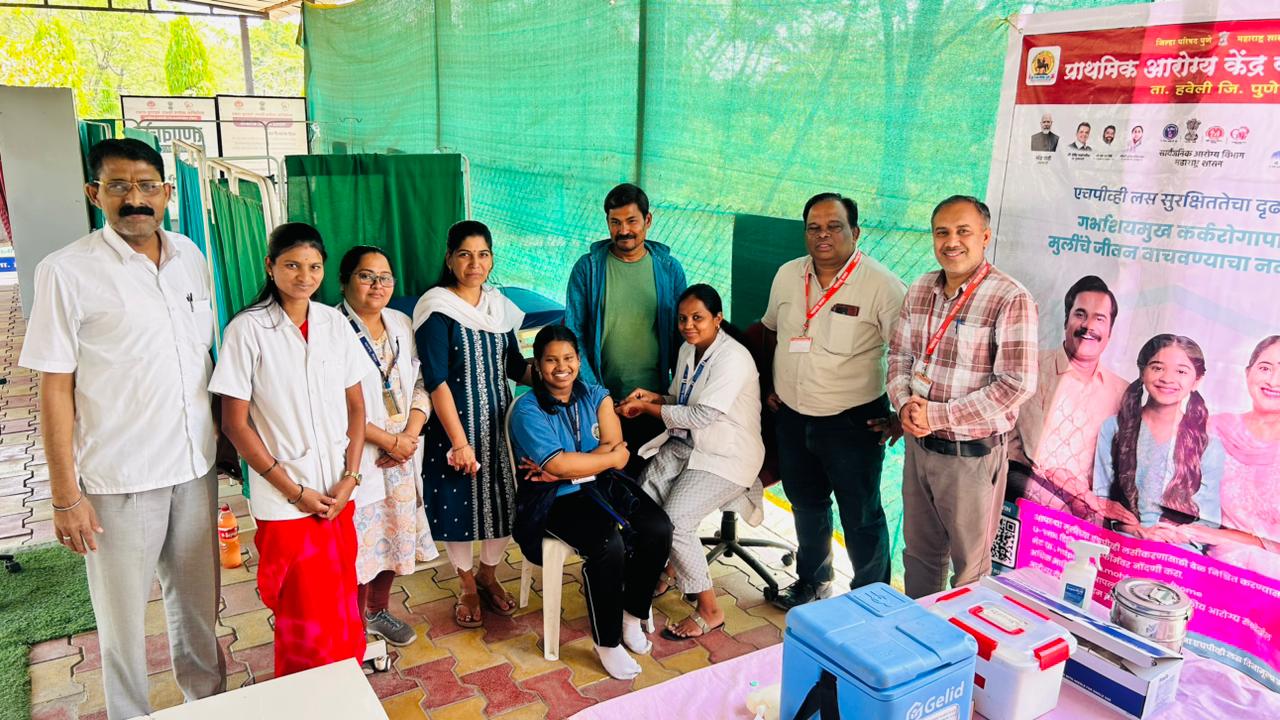
Following the national launch, the HPV vaccination campaign has been implemented across Maharashtra from March 8 through the Public Health Department, while the drive began in Pune district on March 9. Health authorities have appealed to citizens to support the campaign and rely on scientific information rather than rumours.
Cervical Cancer: A Major Health Concern
Cervical cancer, which occurs in the lower part of the uterus known as the cervix, is one of the most common cancers affecting women. Globally, millions of women are battling this life-threatening disease. Nearly 99.7 percent of cervical cancer cases are linked to infection by the Human Papillomavirus (HPV).
In India, cervical cancer is the second most common cancer among women. According to estimates for 2024, around 78,499 new cases were reported in the country, while 42,392 women lost their lives due to the disease. Age-standardized data from 2022 shows that 11.6 women per one lakh population are diagnosed with cervical cancer, while the mortality rate stands at 5.1 per one lakh women.
Understanding the HPV Virus
HPV belongs to the Papillomaviridae family and is a double-stranded DNA virus. More than 200 types of HPV have been identified, some of which are low-risk while others have a high potential to cause cancer. At present, 17 HPV types are known to be associated with cancer, including 16, 18, 45, 33, 58, 31, 52, 35, 59, 39, 56, 51, 68, 73, 26, 69 and 82.
Among these, HPV types 16 and 18 are considered the most dangerous, accounting for around 77 percent of cervical cancer cases globally and nearly 83 percent of cases in India.
Symptoms and Risks
In the early stages, cervical cancer often does not show clear symptoms. However, as the disease progresses, signs such as abdominal pain, pain during intercourse, abnormal growth in the cervix, fistula formation, sciatica, or leg cramps may appear. Early screening and preventive measures are therefore considered crucial.
HPV infection is also regarded as the most common sexually transmitted infection affecting the reproductive tract. Although many infections clear naturally within one to two years without symptoms, persistent infection with high-risk HPV types can lead to precancerous conditions such as CIN-1, CIN-2 and CIN-3, which may eventually develop into cervical cancer. HPV infection can also cause cancers of the anus, throat, vagina and penis.
Global and National Targets
To eliminate cervical cancer as a public health problem, global health authorities have set a target of reducing cases to fewer than four per one lakh women per year. To achieve this goal by 2030, three major targets have been defined:
- 90% of girls below 15 years should receive HPV vaccination
- 70% of women should undergo screening by the age of 35 and again by 45
- 90% of women diagnosed with the disease should receive timely treatment
In line with these goals, the HPV vaccine has been recommended for inclusion in the national immunization programme.
HPV Vaccine and Protection
The quadrivalent HPV vaccine (Gardasil) is administered as a 0.5 ml intramuscular injection in the upper arm. In India, the government has adopted a single-dose schedule instead of the earlier two or three doses. Research indicates that one dose provides protection comparable to two doses and offers long-lasting immunity.
Vaccination is most effective when administered before girls become sexually active, significantly reducing the risk of cervical cancer.
Vaccination Plan in Pune District
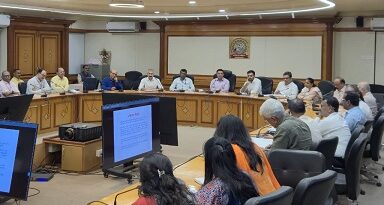
To ensure effective implementation of the campaign, the Pune district administration has prepared a detailed action plan. Under the drive, approximately 98,907 girls aged 14 years are expected to benefit from HPV vaccination. This includes:
- 41,387 girls in rural areas
- 33,000 girls under the Pune Municipal Corporation
- 24,520 girls under the Pimpri-Chinchwad Municipal Corporation
According to Dr. Ramchandra Hankare, District Health Officer of the Pune Zilla Parishad, the vaccination campaign for girls aged 14 years (those who have completed their 14th birthday but not yet turned 15) began on March 9 in the district.
The campaign is being conducted under the guidance of Jitendra Dudi, District Collector of Pune, Gajanan Patil, Chief Executive Officer of the Zilla Parishad, and Additional CEO Chandrakant Waghmare.
Awareness programmes are being organised in schools to educate students and parents about the benefits of vaccination, with support from the School Education Department. Authorities have urged citizens to cooperate and contribute to the success of the vaccination drive.
For more information, citizens can contact the toll-free health helpline number 104.