‘Dharitrichya Lekee’ Celebrates Womanhood Through Marathi Songs
Musical programme at Prof. Ramkrishna More Auditorium marks Classical Marathi Language Week
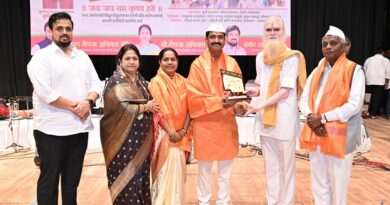
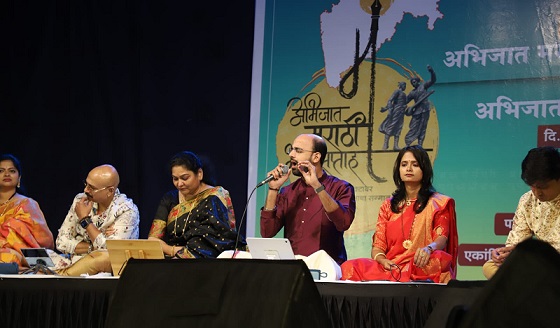
PIMPRI : A musical celebration of the diverse expressions of womanhood in Marathi songs, titled ‘Dharitrichya Lekee’, was organised at the Prof. Ramkrishna More Auditorium in Chinchwad as part of Classical Marathi Language Week being observed by the Pimpri-Chinchwad Municipal Corporation (PCMC).
The week is being celebrated from October 3 to 9, 2026, under the guidance of PCMC Commissioner Dr. Vijay Suryawanshi and Additional Commissioner Vikrant Bagade, and under the supervision of Special Officer and Marathi Language Coordination Officer Kiran Gaikwad. The initiative aims to promote, preserve and spread the Marathi language while creating awareness about its classical heritage.
The programme featured singers Dhananjay Mhaskar, Amol Bawdekar, Yogita Godbole, Priti Nimkar and Anagha Pendse. Through a selection of popular and devotional Marathi songs, the artistes presented various dimensions of a woman’s emotional world, including motherhood, affection, love, devotion, achievement, self-respect and inner strength.
The programme opened with ‘Jai Sharade Vagishwari’, written by Shanta Shelke, invoking Goddess Saraswati. This was followed by songs portraying devotion, motherhood and the strength of women. ‘Kausalyencha Ram Bai’ highlighted devotion, while the lullaby ‘Guni Bal Asa Jagasi Ka Re Vaya’ brought out the emotions of motherhood and affection.
The rich devotional tradition of Marathi music was further represented through ‘Majhe Maher Pandhari’ and ‘Vithu Mauli Tu’, evoking the spiritual legacy of the Sant tradition.
The programme also took audiences on a nostalgic journey through Marathi light music with songs such as ‘Tula Pahile Mi Nadichya Kinari’, ‘Lajun Hasane An Hasun Te Pahane’, ‘Tyachi Dhoon Jhankarli Romaromant’, ‘Navika Re Vara Vahe Re’ and ‘Ketkichya Bani Tithe Nachla Ga Mor’.
Adding a folk flavour to the evening was ‘Jalimandi Pikli Karvanda’, written by G. D. Madgulkar and composed by Sudhir Phadke, which evoked images of rural life, love and nature.
The programme also highlighted women’s self-respect and identity through songs such as ‘Amhi Jijauchya Muli’, which connected the idea of women’s empowerment with the legacy and ideals associated with Rajmata Jijabai.
The immortal musical legacy of Lata Mangeshkar was represented through ‘Bai Bai, Manmoracha Kasa Pisara Phulla’ and ‘Majhe Rani, Majhe Moga’, written by Shanta Shelke and rendered by Lata Mangeshkar and Suresh Wadkar. The former, from the film Mohityanchi Manjula, was composed by Anandghan.
Songs associated with the melodious tradition of Suman Kalyanpur, including ‘Ketkichya Bani Tithe Nachla Ga Mor’ and ‘Navika Re Vara Vahe Re’, also received an enthusiastic response from the audience.
The programme explored different shades of relationships and love through ‘Nastes Ghari Tu Jevha, Jeev Tutka Tutka Hoto’ and ‘Gomu Sangatin Majhya Tu Yeshil Kay’. ‘Majhe Rani, Majhe Moga’, with its Konkani linguistic flavour, added another dimension to the evening’s portrayal of love and emotions.
The traditional devotional composition ‘Aicha Jogwa, Jogwa Magen’ further highlighted the spiritual tradition of Goddess worship and the connection between devotion and feminine strength.
The musical evening concluded on an inspirational note with ‘Jayostute Shri Mahanmangale’, based on the words of freedom fighter Vinayak Damodar Savarkar and famously rendered by Lata Mangeshkar.
Through Classical Marathi Language Week, the PCMC is seeking to introduce citizens to the richness of Marathi literature, poetry, songs, music and folk traditions while encouraging wider public participation in the preservation and promotion of the language.
The ‘Dharitrichya Lekee’ programme provided a musical glimpse into the richness of Marathi lyrics, cultural traditions and the many emotional dimensions of women’s lives.