Chakan Waste Processing Project Moves Ahead, 19 Villages to Get Relief
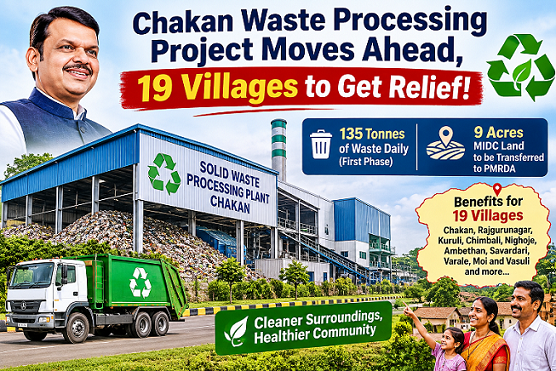
MIDC’s 9-acre land to be transferred to PMRDA; first phase planned to process 135 tonnes of waste daily
Pimpri : A major step is being taken towards improving solid waste management in the Chakan industrial belt and surrounding villages, with the land transfer process for the proposed waste processing project reaching its final stage.
Under the leadership of Chief Minister Devendra Fadnavis, efforts are underway to develop a common solid waste processing facility for the Chakan industrial area and 19 nearby villages. The project is expected to provide relief to residents by ensuring scientific processing and better management of daily waste.
9 Acres of MIDC Land to Be Transferred to PMRDA
The process of transferring around nine acres of land in the Chakan MIDC area to the Pune Metropolitan Region Development Authority (PMRDA) is currently underway. Officials from MIDC and PMRDA have jointly inspected the proposed site and reviewed the project.
The tender process for appointing a contractor to operate and maintain the waste processing facility has also been undertaken.
135 Tonnes of Waste to Be Processed Daily
In the first phase, the project is planned to have the capacity to scientifically process 135 tonnes of solid waste every day. Considering the expected population growth and increasing waste generation in the Chakan region over the next 30 years, the processing capacity will be expanded in phases.
19 Villages to Benefit from the Project
The proposed facility will benefit Chakan, Rajgurunagar, Kuruli, Chimbali, Nighoje, Ambethan, Savardari, Varale, Moi and Vasuli, along with other villages in the region.
Most of these villages are located within a radius of around 20 kilometres from the proposed facility. This is expected to make waste collection and transportation to the processing centre easier and more systematic.
Once operational, the project will provide a common scientific waste processing facility for the Chakan industrial area and surrounding 19 villages, addressing an important civic infrastructure requirement of the rapidly developing region.